(Just an edit to clarify that now you can get to hear all the songs below on a special playlist page I just created. Yay me.)
I just finished lining up 20 songs, all of them (bar maybe one or two examples) released as singles sometime around the mid '80s, that exemplify what I would've played had I had control of a radio station and wanted to showcase some of the best of underrated '80s New Pop. The following is my list and some brief comments about them (I'll probably expand on many of them as this blog progresses):
1. Breathe, "Hands To Heaven": Oddly and heartbreakingly poignant and tender slow song. Beautifully rendered, delicate, with great vocals.
2. Johnny Hates Jazz, "Shattered Dreams": I am almost obsessed with this song. It is one of the most perfect examples of beautiful sophistipop. Remind me to write more about Johnny Hates Jazz sometime in the near future. I consider them HIGHLY underrated.
3. Boy Meets Girl, "Waiting For A Star To Fall": Fun little pop ditty. Assumes no pretensions, tries just to entertain the listener and succeeds.
4. Dan Hartman, "I Can Dream About You": Picks up a heart that has been downtrodden and lifts it up into the stratosphere. Just close your eyes and let the song do its work. Hartman, like fellow Philadelphian Daryl Hall, sang so soulfully.
5. The Parachute Club, "Rise Up": Very Up With People. Very hopeful and aspirational pop; fits somewhat in with the late '60s aesthetic, though without being fun-free.
6. Jesse Johnson & Stephanie Spruill, "Heart Too Hot To Hold": One of the most addictive dance pop songs ever recorded. You play it once and instantly want to play it again. Part of the glory that was The Breakfast Club's end credits.
7. Curiosity Killed The Cat, "Misfit": Andy Warhol championed them for a reason -- this song (again with an Up With People message of "like yourself the way you are") has hooks galore and is sophisticated to boot. The only decent thing Simon Cowell's ever been responsible for, and they came at the beginning of his career.
8. Bananarama, "The Wild Life": I can't believe this song wasn't their biggest hit. It is so intense and wonderful and the hooks build up atop each other and, and, and....
9. Benjamin Orr, "Stay The Night": Ah, God bless this late leader of The Cars for running with the New Pop meme after the smash success of "Drive". One of the Good Guys of American music; will definitely be missed.
10. Wang Chung, "Fire In The Twilight": Another Breakfast Club soundtrack listing. The video (no longer available on YouTube thanks to the Viacom fascists) was a lot of great fun, much like this song is.
11. Kajagoogoo, "Hang On Now": My favorite Kajagoogoo track. It is slow and sad and hopeful and filled with magic in both voice and instrumentation. If you liked Limahl's "The Neverending Story", chances are you love this song too.
12. King, "Love & Pride": Reaching a bit back into the archive to get this kitschy yet fun and tight (as tight as the jeans seen in the accompanying video) song.
13. Icehouse, "Electric Blue": The reason I got into Icehouse. I own the cassingle of this song and can't count the number of times I've played it. So sophisticated, so classy, so filled with pop hooks, and Iva Davies was so cute back then.
14. Alphaville, "Dance With Me": If you don't like this song, I don't know if I want to be friends with you. It is so full of hope and life and power and energy and exuberance and you can just feel Marian Gold's smile radiating outward to your ears that it is undeniable.
15. Howard Jones, "What Is Love?": A surprisingly touching and tender-hearted love song wrapped up in a cynical song title. I'm thinking I might want to save my thoughts about that for a future post.
16. a-ha, "The Living Daylights": My favorite Bond theme, besting even my beloved Duran Duran's "A View To A Kill". The reason? The song is less melodramatic -- indeed, it is understated for a Bond theme. Plus, I mean, it's a-ha; these guys are the pride of Norway for a reason.
17. Scritti Politti, "Perfect Way": Aw yeah, the masters of mid '80s New Pop with their biggest hit. A well-deserved chart smash. And the video -- oh, be still my adolescent heart! As a teen, I wanted to find the "perfect way" to win the beautiful Green Gartside's affections; now, I rejoice as he finally marries that girl who made HIM "go crazy".
18. Industry, "State Of The Nation": One of the few American music groups that actually got the '80s RIGHT, once they got little Jon Carin in (he was only 20 when this song was released). Another song I'm almost obsessed with.
19. Comsat Angels, "I'm Falling": Post-punk stalwarts, a la Scritti Politti, who got into New Pop by the mid '80s and mastered it. Slightly reggae-flavored, this song showcases a real sense of yearning. It was ballyhooed by the CSA fanbase but deserves to be re-evaluated NOW.
20. Naked Eyes, "Promises, Promises": Showcases everything I love about Tony Mansfield's spookily atmospheric synth production, along with being a good argument for why Pete Byrne and Rob Fisher were considered the Bacharach/David of '80s New Pop. (Disclaimer: This would be the U.S. version of this song, which I naturally prefer to the U.K. version, though the latter version is good in an exotic sort of way.)
Wow, this was fun. I should do more of these.
Wednesday, April 18, 2007

The Incestuous World Of Scottish New Wave, Part 1 (Possibly)
First off, a moment of silence for the victims of the Virginia Tech massacre. Especially for Dr. Liviu Librescu, who lived and died the very definition of the word "hero". I won't admire very many people the way I admire him.
...
...
...
...
In the wise words of my friend Chelsea, "the music business is incestuous".
Last night I listened to this wonderful, anthemic, powerful track, but the problem was, I didn't know who performed it or what the name of the song was. Today, after doing some research, I found out the name of the song was "The Glory Of Love" and it was performed by a group called The Armoury Set. After searching for information about The Armoury Set, I was surprised to find that it was a group featuring the lead vocals of Richard Jobson (formerly of The Skids) and the lead guitar work of the late John McGeoch (of Magazine and Visage and other groups/projects). The Skids immediately connect me to the obvious: the late Stuart Adamson, The Skids' lead guitarist before he left to form Big Country, a group that was one of the more popular Scottish artists in the States. It also leads me indirectly to the Scars (see my prior post about them), whose bandmates deeply admired The Skids and whose lead guitarist was directly influenced by Adamson.
The McGeoch/Magazine connection leads me to the recently departed Colin Thurston, best known for his engineering work with David Bowie and for producing Duran Duran's first two studio albums, but whose first production work was actually Magazine's Secondhand Daylight. It also leads to Howard Devoto and The Buzzcocks, of whom he was their first lead singer. (After Devoto left to join Magazine, the band's lead guitarist Pete Shelley stepped up to lead vocals.) The McGeoch/Visage connection leads me directly into the world I know best/most about, the late '70s/early '80s New Romantic scene, with Steve Strange (Visage's lead singer/public face) playing a key role in the scene and former Scottish teen idol Midge Ure joining forces with Ultravox's Billy Currie on the Visage project, then joining up with Currie and the rest of the John Foxx-less band and guiding them into a more electronic, NuRo sound. Ure and Duran Duran would later be bandmates of a sort on a different project: 1984's Band Aid, whose "Do They Know It's Christmas?" was penned by Ure and Bob Geldof and performed by a host of predominantly British musicians, including all the members of Duran Duran.
Backing up a bit, the song by The Armoury Set that captivated my attention in the first place reminded me a lot of Simple Minds, with its sweepingly melodramatic atmosphere and grand, majestic scope that attracted me to the song. The Simple Minds were the first taste of Scottish New Wave for me and for a lot of others here in the States. The Simple Minds lead me, as has been stated before on this blog, to Endgames, whose drummer Brian McGee was one of the founder members of Simple Minds (even having been friends with Jim Kerr and Charlie Burchill from early childhood), and who utilized the saxophonic talents of Paul Wishart of Endgames for an early '80s tour. And reading an interview done of Richard Jobson, with his mentioning his Irish Catholic roots and his childhood insistence of supporting the "right" Scottish football organizations (shades of Northern Ireland and Protestant vs. Catholic struggles here), reminded me of another Scottish musician whose music I discovered via the New Wave Outpost, Steven Hale of the London-based Language, whose heritage is similar to Jobson's, but who refused to be a fan of football/soccer precisely because of those Protestant/Catholic struggles. (I would go on about how those Protestant/Catholic struggles remind me of those I see evidenced throughout my very American life, but that's for another kind of blog.) And Steven Hale connects me to Gang Of Four via GO4 lead singer Jon King's sister Debbie, a backup singer in Language and a lead singer in another project the percussionist Hale was in, and Eddi Reader, another backup singer (and Scotland native) who went on to score big with Fairground Attraction ("Perfect").
Oh, this is all very exhausting and circuitous, but it does prove Chelsea's point that the music industry IS incestuous, especially when it's concentrated in particular focal points such as Scotland. A country as small as that, with just over 4 million citizens/residents and an area size roughly 1/10 of my home state's (I'm a Texan), will be bound to have quite a lot of connections amongst its musician citizenry. But to see them all evidenced in such a small time frame (the action happens from 1977 - 1984, roughly the life span of the original New Wave movement) is breathtaking, especially when all of them apparently created such high-quality, wonderful music.
...
...
...
...
In the wise words of my friend Chelsea, "the music business is incestuous".
Last night I listened to this wonderful, anthemic, powerful track, but the problem was, I didn't know who performed it or what the name of the song was. Today, after doing some research, I found out the name of the song was "The Glory Of Love" and it was performed by a group called The Armoury Set. After searching for information about The Armoury Set, I was surprised to find that it was a group featuring the lead vocals of Richard Jobson (formerly of The Skids) and the lead guitar work of the late John McGeoch (of Magazine and Visage and other groups/projects). The Skids immediately connect me to the obvious: the late Stuart Adamson, The Skids' lead guitarist before he left to form Big Country, a group that was one of the more popular Scottish artists in the States. It also leads me indirectly to the Scars (see my prior post about them), whose bandmates deeply admired The Skids and whose lead guitarist was directly influenced by Adamson.
The McGeoch/Magazine connection leads me to the recently departed Colin Thurston, best known for his engineering work with David Bowie and for producing Duran Duran's first two studio albums, but whose first production work was actually Magazine's Secondhand Daylight. It also leads to Howard Devoto and The Buzzcocks, of whom he was their first lead singer. (After Devoto left to join Magazine, the band's lead guitarist Pete Shelley stepped up to lead vocals.) The McGeoch/Visage connection leads me directly into the world I know best/most about, the late '70s/early '80s New Romantic scene, with Steve Strange (Visage's lead singer/public face) playing a key role in the scene and former Scottish teen idol Midge Ure joining forces with Ultravox's Billy Currie on the Visage project, then joining up with Currie and the rest of the John Foxx-less band and guiding them into a more electronic, NuRo sound. Ure and Duran Duran would later be bandmates of a sort on a different project: 1984's Band Aid, whose "Do They Know It's Christmas?" was penned by Ure and Bob Geldof and performed by a host of predominantly British musicians, including all the members of Duran Duran.
Backing up a bit, the song by The Armoury Set that captivated my attention in the first place reminded me a lot of Simple Minds, with its sweepingly melodramatic atmosphere and grand, majestic scope that attracted me to the song. The Simple Minds were the first taste of Scottish New Wave for me and for a lot of others here in the States. The Simple Minds lead me, as has been stated before on this blog, to Endgames, whose drummer Brian McGee was one of the founder members of Simple Minds (even having been friends with Jim Kerr and Charlie Burchill from early childhood), and who utilized the saxophonic talents of Paul Wishart of Endgames for an early '80s tour. And reading an interview done of Richard Jobson, with his mentioning his Irish Catholic roots and his childhood insistence of supporting the "right" Scottish football organizations (shades of Northern Ireland and Protestant vs. Catholic struggles here), reminded me of another Scottish musician whose music I discovered via the New Wave Outpost, Steven Hale of the London-based Language, whose heritage is similar to Jobson's, but who refused to be a fan of football/soccer precisely because of those Protestant/Catholic struggles. (I would go on about how those Protestant/Catholic struggles remind me of those I see evidenced throughout my very American life, but that's for another kind of blog.) And Steven Hale connects me to Gang Of Four via GO4 lead singer Jon King's sister Debbie, a backup singer in Language and a lead singer in another project the percussionist Hale was in, and Eddi Reader, another backup singer (and Scotland native) who went on to score big with Fairground Attraction ("Perfect").
Oh, this is all very exhausting and circuitous, but it does prove Chelsea's point that the music industry IS incestuous, especially when it's concentrated in particular focal points such as Scotland. A country as small as that, with just over 4 million citizens/residents and an area size roughly 1/10 of my home state's (I'm a Texan), will be bound to have quite a lot of connections amongst its musician citizenry. But to see them all evidenced in such a small time frame (the action happens from 1977 - 1984, roughly the life span of the original New Wave movement) is breathtaking, especially when all of them apparently created such high-quality, wonderful music.
Saturday, April 14, 2007
'80s Pop Culture In A Fork: My Awesome '80s Diet

Feeling a little on the weak side tonight, so I'll tackle a light topic: Food in the '80s.
Unlike most aspects of '80s living, the food trends of the '80s did hit me right at home. Which meant I spent a lot of time noshing on healthier fare and being aware of diets. It also meant eating that was at the time thought to be attuned to my mother's diabetes. Using margarine instead of butter, drinking diet sodas and sugar-free Kool Aid, having sugar-free Jell-O and Cool-Whip for dessert -- all of that mingled both with the diet-crazed '80s and my mother's doctors' admonitions to follow a healthier diet. Other food trends also made their way into my family's regular food eating. Hamburger Helper, which debuted in the '70s and was many an '80s working woman's savior, was a regular feature for dinner and a cause for celebration for little girl me. Always served with an iceberg lettuce and tomato salad (thousand island and Catalina dressings both available), Hamburger Helper always felt like some reward or special treat and still tastes (to me) like home. (My favorite flavor was always beef stroganoff.)
But back to the sodas -- the first soda I ever drank was TaB Cola. Once the target of ridicule for its distinctive saccarhine taste and even temporarily taken off the shelves when the "saccharine as possible carcinogen" scare was going on, TaB is a sort of acquired taste. You take the first couple of sips of the soda and can't believe anything could taste that bitter or artificial, but then you drink some more and it starts to taste pretty good. Almost fruity, even. By the time you've finished off a can, you can't wait to get into the next one. And that's how it starts. For me, that taste is the taste of my lost childhood, especially since so few retailers these days actually stock it still. I may have moved on to Diet Coke and other diet sodas, but TaB will always be that first soda for me. One look at that ubiquitous pink can and it's instant flashback time to a time when I would come home in my Catholic school girl uniform, peel off my sweater and skirt, take my penny loafers off, walk around in my school shirt and the shorts I wore under the skirt, grab a TaB from the fridge, and sip away as my parents started on dinner.
This is not to say that my childhood was sugar-free. Oh no. I too enjoyed cookies and pie and cake and ice cream. It's just -- I remember them being more "occasional" foods, goodies eaten during special occasions or every once in awhile. And I don't remember seeing them all that often around the house. Usually when I would eat cookies they were store-bought. Same with pies, though at least you had to bake them at home (oh Mrs. Smith's, where would my childhood be without you?). Cake came from a mix. And ice cream was a rare treat indeed, usually reserved for the once-monthly trips to McDonald's where, if I was good, I would get a small strawberry sundae or maybe even a cone. Usually what constituted as "ice cream" around the house was actually sherbet, predominantly the peach or pineapple flavors. Sherbet, touted in Mom's diet books as being a healthier alternative to ice cream, is now something I don't really crave, having converted to the dark side of ultra-creamy ice cream.
Not all of my old food biases from the '80s have been converted. For example, I still can only stand just a little bit of butter in my food. I still feel strongly that the taste of margarine is actually a "buttery" taste and cannot comprehend anti-margarine bias. I don't really know what cake made from scratch tastes like and don't have that curiosity thanks to Betty Crocker. My blood runs cold whenever anyone laughs at the concept of Hamburger Helper or TV dinners or anything else that was meant to be a quick fix and eat type dinner concept. I'll only drink regular sodas if I'm having to work a graveyard shift (so I can stay awake better) and can't fathom drinking those all the time, I in fact find a lot of things "too sweet", and I wonder how certain families could afford having a parent stay at home long enough to fix a fully home-prepared and -cooked dinner every night and secretly wonder if those "like Mom/Grandma used to make" families have been solidly middle class for generations.
I guess that's what my '80s really boils down to as far as food goes. See, I was still living in a solidly blue-collar, lower middle class socioeconomic ring during that decade, and I know for a fact both my parents worked outside the home on a full-time basis because they couldn't afford to do otherwise. By the early '90s, which is when my parents moved up in their respective jobs (my mom with the most impressive leap, comparatively), we were finally able to work towards entering the regular middle class and that's when we started broadening our food horizons. But a lot of the "from scratch" food nostalgia that gets propagated by the food-oriented mass media comes from a background of generations of solidly middle class families, whose female members were historically able to make the time and effort to making things such as pie crusts and homemade cookies and who passed that down to the proceeding generation. The '80s was one historic moment when all of that really didn't make that much of a difference because everyone was busy and convenience (and affordability) reigned. But by the time the true cultural '90s rolled around and people started murmuring about going back to their "food roots", the fissures in the pavement started to show and it became more obvious who was working hard in the '80s because they wanted to, and who was working hard because they HAD to.
So I will continue to enjoy Cool Whip (that's another thing -- I've never had "fresh sweet whipped cream" before) and sugar-free Jell-O. I will continue to insist on buying pre-made pot pies and cookie dough to bake up in the oven and ooh and aah at the results. I will drink my TaB and eat oat- and fiber-rich cereals and find no difference in the pleasure values between those and the sugary "kid" cereals that cost just as much. I will not have bread snobbery except for the recent development of my preferring whole wheat bread to regular white. I will enjoy iceberg lettuce and tell everyone about that. I will refuse to stop feeling more comfortable with the taste of margarine than I am with the taste of butter. And I will eat premium ice cream with the knowledge that my dessert is a luxury, not a necessity, and that I would've never gotten to eat that when my age was in the single digits.
(Wow, two serious posts in a row. I must be going for some record here.)
Friday, April 13, 2007
Statement Of (Blog) Being, Part 3
I am tired, so I think I'll go off on little tangents. Hopefully one of them will stick.
Why do I love synthpop/'80s "New Romantic" music/synth rock so much? I suspect part of it has to do with a certain sort of exoticism. Because I come from cultures where that sort of cold synth sound is absent or undervalued, there's a sort of unknown geography going on there. Or maybe it's because it's all so immediate. Or....
You know, I was thinking about something this morning on my drive to work. I kept on thinking about how we as Americans hate fun. We are fun haters. We cannot stand the idea of anyone having real, genuine, organic fun, and so we try to destroy as many "fun" outlets as possible. In the '60s, it was okay to have fun because there was an overwhelming abundance of young people who thought nothing of having fun (and also thought nothing of the future consequences for this "fun"), but by the early '70s fun was completely out of the equation, replaced instead by musical wankery. The musical equivalent of trying to see who has the bigger dick, the overnoodley arena/album rock that was in vogue throughout the American '70s delivered nothing but endless instrumental solos and caused lots of (predominantly) male audiences to feel self-important as they beat their chests and hollered at the fantastical extension of their own manhood. Glam rockers tried valiantly to funnel some of that attention their way but got practically nowhere in the States, the odd occasional megahit notwithstanding.
By the late '70s, three separate musical revolutions, two of which emerged from the U.K. and one that was homegrown, conspired to try to shake up the world of music. The British twosome, punk rock and a genre called New Wave, both sought to simplify the performance and writing of rock music, distilling it to its very essence. Punk brought back the rebellious sneering and attitude that made rock & roll dangerous in the eyes of the '50s Establishment, while New Wave went back to the formula that won American audiences over to the artists of the '60s British Invasion. The American rebellion took the form of a more danceable version of funk called disco; largely faceless artists (though there were a few luminaries in the genre) performed music mostly written by others that caused people to have fun, lighten up, get over themselves, and just have a good time. Though it could've been considered prefabricated pop, it differed from the cookie cutter assembly line teen pop of the early '70s by actually being an outlet for these musicians' and composers' artistic expressions. Soon punk rock and disco merged into another musical genre altogether, post-punk, which later fused with original New Wave to create the iconic '80s New Wave sound most people can readily point out.
None of the above were fully accepted in the U.S., though, again because we hate fun. Oh no, we weren't going to invest the time to figure out literate irony and sly cheekiness in our American version of punk; no, American punk had to be yet another outlet for Neanderthal macho posturing, with shirtless males from the suburbs growling into the microphone or noisily destroying their guitars (and their listeners' eardrums). As for original New Wave? Heck no, we won't stand for that kind of business. Those musicians look like they're having the time of their lives performing catchy songs with poetic lyrics! No, we have to have our musicians be absolutely morose and miserable-looking. We have to have songs that we have to suffer through. And heaven help us if our musical lyrics are either spelled out for us or deliberately obtuse via the prolific use of mind-altering substances. As for disco -- well, please, we are not going to stand for a multicultural, multisexual audience actually comingling on the dance floor in a TRULY united nations manner. We'll just make vaguely homophobic remarks and pretend disco is all about the novelty songs written by people trying to cash in on disco. No, we'd rather have anguished troubadors whining on about their lost childhoods while strumming passionlessly on their (acoustic) guitars because all we want to feel is RAGE RAGE RAGE! No love, no serenity, we want to RAGE ON.
So when '80s New Wave/New Pop music (what the synthpop of the '80s was known as) became all the rage amongst early '80s American adolescents, when the most vital American DJs were the ones who were championing this largely British musical format (i.e. Rodney Bingenheimer and Richard Blade), when teenaged boys and girls were having fun listening to music that was a mixture of British punk's DIY aesthetic and winkily witty lyricism, disco's catchiness and emphasis on a strong rhythm section, and original New Wave's insistence on a return to musical simplicity and tightness in chord structure, the American musical establishment could not recoil fast enough. Oh no, these overgrown hippies and stoners exclaimed, our youth of today are having fun with music that could actually be considered revolutionary! They might steal our late '60s counterculture thunder! So they called in Greil Marcus and Dave Marsh and the rest of America's most prominent music journalists to make sure that '80s New Wave/New Pop got quashed but good, which it was by the time 1987 rolled around. By that time, music became severely ghettoized once again, leaving few choices for anyone who wanted anything that was as much a breath of fresh air as New Pop was. (Interesting note: By 1989, the only artist to have that sort of witty, fun-loving spirit was the U.S.'s They Might Be Giants.)
After suffering through the 1990s and the first couple of years of the millennial decade, i.e. the nadir of popular music overall, indie/college artists worldwide rediscovered the joy and exhiliaration of the music that caused the Rolling Stone magazine set to quake in its moldy old boots. They found that punk could sound like something other than a bunch of hypertestosteroned yelping. They discovered the joys of disco dancing with a technological bent that would make Tubeway Army smile. They realized that "New Wave" wasn't the slur they were raised to believe it was. And they found that post-punk was the absolute mark of perfection in the world of '70s pop music. Now even '80s New Pop is getting a reexamination, albeit from artists that are new to the point of being unsigned. The problem with the giant bulk of those artists is that they have yet to reap any real financial or popular rewards for their efforts. They've been getting lots of adoration from the college campus set, but the American Top 40 is still being hijacked by the same ghettoized contrivances that have held popular radio prisoner for the past ten years.
So now what? What I'm thinking is that there needs to be a real critical revolution that goes on. Not from the British, for they will support anything with a real organic intensity and committment to the art of music as long as it isn't too much of a commercial success; indeed, the "Tall Poppy Syndrome" as called out by Australian celebrity journalists toward Aussie celebs has its roots in British music journalism. It is the American music journalism establishment and other journalists influenced by same who continue to enact an unspoken policy of a lack of support for that which did not originate for the Baby Boomer generation. A few lesser-known members of the U.S. musical press are a part of the much-needed revolution, but there still needs to be more support, particularly from the most egregious offenders, Rolling Stone and Entertainment Weekly. And there needs to be more of the music consumers' money devoted to that which sought to involve music in a new revolution -- one that would embrace synths, one that would see nothing wrong in urgent disco beats, one that would put to rest the hoary old sound of a thousand souls dying.
I am but one person, and a mere music listener/consumer at that. But I will do my best to get the ball rolling.
(Wow, I actually made a point tonight. Impressive.)
Why do I love synthpop/'80s "New Romantic" music/synth rock so much? I suspect part of it has to do with a certain sort of exoticism. Because I come from cultures where that sort of cold synth sound is absent or undervalued, there's a sort of unknown geography going on there. Or maybe it's because it's all so immediate. Or....
You know, I was thinking about something this morning on my drive to work. I kept on thinking about how we as Americans hate fun. We are fun haters. We cannot stand the idea of anyone having real, genuine, organic fun, and so we try to destroy as many "fun" outlets as possible. In the '60s, it was okay to have fun because there was an overwhelming abundance of young people who thought nothing of having fun (and also thought nothing of the future consequences for this "fun"), but by the early '70s fun was completely out of the equation, replaced instead by musical wankery. The musical equivalent of trying to see who has the bigger dick, the overnoodley arena/album rock that was in vogue throughout the American '70s delivered nothing but endless instrumental solos and caused lots of (predominantly) male audiences to feel self-important as they beat their chests and hollered at the fantastical extension of their own manhood. Glam rockers tried valiantly to funnel some of that attention their way but got practically nowhere in the States, the odd occasional megahit notwithstanding.
By the late '70s, three separate musical revolutions, two of which emerged from the U.K. and one that was homegrown, conspired to try to shake up the world of music. The British twosome, punk rock and a genre called New Wave, both sought to simplify the performance and writing of rock music, distilling it to its very essence. Punk brought back the rebellious sneering and attitude that made rock & roll dangerous in the eyes of the '50s Establishment, while New Wave went back to the formula that won American audiences over to the artists of the '60s British Invasion. The American rebellion took the form of a more danceable version of funk called disco; largely faceless artists (though there were a few luminaries in the genre) performed music mostly written by others that caused people to have fun, lighten up, get over themselves, and just have a good time. Though it could've been considered prefabricated pop, it differed from the cookie cutter assembly line teen pop of the early '70s by actually being an outlet for these musicians' and composers' artistic expressions. Soon punk rock and disco merged into another musical genre altogether, post-punk, which later fused with original New Wave to create the iconic '80s New Wave sound most people can readily point out.
None of the above were fully accepted in the U.S., though, again because we hate fun. Oh no, we weren't going to invest the time to figure out literate irony and sly cheekiness in our American version of punk; no, American punk had to be yet another outlet for Neanderthal macho posturing, with shirtless males from the suburbs growling into the microphone or noisily destroying their guitars (and their listeners' eardrums). As for original New Wave? Heck no, we won't stand for that kind of business. Those musicians look like they're having the time of their lives performing catchy songs with poetic lyrics! No, we have to have our musicians be absolutely morose and miserable-looking. We have to have songs that we have to suffer through. And heaven help us if our musical lyrics are either spelled out for us or deliberately obtuse via the prolific use of mind-altering substances. As for disco -- well, please, we are not going to stand for a multicultural, multisexual audience actually comingling on the dance floor in a TRULY united nations manner. We'll just make vaguely homophobic remarks and pretend disco is all about the novelty songs written by people trying to cash in on disco. No, we'd rather have anguished troubadors whining on about their lost childhoods while strumming passionlessly on their (acoustic) guitars because all we want to feel is RAGE RAGE RAGE! No love, no serenity, we want to RAGE ON.
So when '80s New Wave/New Pop music (what the synthpop of the '80s was known as) became all the rage amongst early '80s American adolescents, when the most vital American DJs were the ones who were championing this largely British musical format (i.e. Rodney Bingenheimer and Richard Blade), when teenaged boys and girls were having fun listening to music that was a mixture of British punk's DIY aesthetic and winkily witty lyricism, disco's catchiness and emphasis on a strong rhythm section, and original New Wave's insistence on a return to musical simplicity and tightness in chord structure, the American musical establishment could not recoil fast enough. Oh no, these overgrown hippies and stoners exclaimed, our youth of today are having fun with music that could actually be considered revolutionary! They might steal our late '60s counterculture thunder! So they called in Greil Marcus and Dave Marsh and the rest of America's most prominent music journalists to make sure that '80s New Wave/New Pop got quashed but good, which it was by the time 1987 rolled around. By that time, music became severely ghettoized once again, leaving few choices for anyone who wanted anything that was as much a breath of fresh air as New Pop was. (Interesting note: By 1989, the only artist to have that sort of witty, fun-loving spirit was the U.S.'s They Might Be Giants.)
After suffering through the 1990s and the first couple of years of the millennial decade, i.e. the nadir of popular music overall, indie/college artists worldwide rediscovered the joy and exhiliaration of the music that caused the Rolling Stone magazine set to quake in its moldy old boots. They found that punk could sound like something other than a bunch of hypertestosteroned yelping. They discovered the joys of disco dancing with a technological bent that would make Tubeway Army smile. They realized that "New Wave" wasn't the slur they were raised to believe it was. And they found that post-punk was the absolute mark of perfection in the world of '70s pop music. Now even '80s New Pop is getting a reexamination, albeit from artists that are new to the point of being unsigned. The problem with the giant bulk of those artists is that they have yet to reap any real financial or popular rewards for their efforts. They've been getting lots of adoration from the college campus set, but the American Top 40 is still being hijacked by the same ghettoized contrivances that have held popular radio prisoner for the past ten years.
So now what? What I'm thinking is that there needs to be a real critical revolution that goes on. Not from the British, for they will support anything with a real organic intensity and committment to the art of music as long as it isn't too much of a commercial success; indeed, the "Tall Poppy Syndrome" as called out by Australian celebrity journalists toward Aussie celebs has its roots in British music journalism. It is the American music journalism establishment and other journalists influenced by same who continue to enact an unspoken policy of a lack of support for that which did not originate for the Baby Boomer generation. A few lesser-known members of the U.S. musical press are a part of the much-needed revolution, but there still needs to be more support, particularly from the most egregious offenders, Rolling Stone and Entertainment Weekly. And there needs to be more of the music consumers' money devoted to that which sought to involve music in a new revolution -- one that would embrace synths, one that would see nothing wrong in urgent disco beats, one that would put to rest the hoary old sound of a thousand souls dying.
I am but one person, and a mere music listener/consumer at that. But I will do my best to get the ball rolling.
(Wow, I actually made a point tonight. Impressive.)
Thursday, April 12, 2007
From The Vault: Scars' Author! Author!
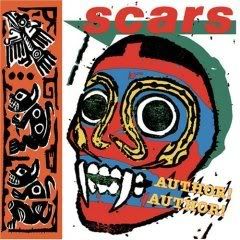
I've been incredibly derelict with this blog lately, so I shall have to play catch-up.
What I've been listening to recently: I don't know, a lot of stuff really. I suppose the most recent CD I spinned could be a start, and that would be the utterly brilliant reissue of the Scars' Author! Author!. Now I know they don't necessarily fit into the overall schematic of this blog because they were highly critically adored throughout their existence and have continued to receive positive attention from All The Right People, but the simple fact that I discovered them through the New Wave Outpost's "Song Of The Week" super-obscuro New Wave feature will lead one to believe that they were at least COMMERCIALLY underrated.
Seriously, babes. They should have been Scotland's answer to Duran Duran. From me, that's a massive compliment, as I view Duran Duran to be the absolute gold standard acme of what is great about catchy pop music. The Scars performed music quite like that, with a little more of an anarchic punk spin; their songs were a little more primal and urgent and raw. But their last and most well-known single "All About You" wouldn't have been out-of-place on a compilation next to Simple Minds' "All The Things She Said" and "China" by Red Rockers, which is why that is the song most NWO regulars and others coming across that band from a New Wave standpoint remember that song.
I, however, think that only partially tells the musical story of a band whose extraordinary precociousness is rivaled only by their drive, passion, and determination in all they did and have done. With the average age of the individual band members not even 18 at the time of the band's 1977 formation, all four bandmates brought with them impressive resumes. Lead guitarist Paul Research and bassist John Mackie (both brothers) were both classically trained musicians before getting into rock music in their early teens, lead singer Robert King started his music career at the tender age of 12, and teenaged Calumn Mackay was already a veteran of various bands. Immediately upon the band's formation, all four boys committed themselves seriously to writing music and performing gigs and soon began attracting a small but loyal fanbase as they almost singlehandedly established punk in their native Edinburgh.
By the time the band got started on writing songs for the album Author! Author! their sound had mellowed and matured into something more authentically post-punk -- a comingling of raw punk verve and catchy disco grooves. And that's what most of the music on the album sounds like. However, with "All About You" the band landed on a new, even poppier sound, something with all the passion and intensity one might expect from a Scars track but with a preternatural maturity in its execution and delivery. Had the band continued on this musical track for a followup album, their fanbase would have grown exponentially, and had they released yet another album no one would have dared forget them. After five albums, people would be calling them "Scotland's answer to Duran Duran" and they, not the Simple Minds, would have become the biggest Scottish pop group of the '80s. Which could've turned out to be not quite as good a thing as that seems.
See, the individual band members (including second drummer Steve McLaughlin) have managed to do very well for themselves post-Scars, continuing with their lifelong pattern of impressive accomplishments. Robert King, who learned Greek at the almost literally unbelievable age of 10, has continued to showcase his talent for languages as a Ph.D. holder/expert on ancient languages. Paul Research is continuing to make and perform both popular and classical music, runs marathons, and works a decidedly white collar IT job. John Mackie owns his own design firm. Calumn Mackay is a physicist and engineer who continues to play drums in blues and rock bands in his Grenoble (France) home. And Steve McLaughlin is an in-demand record producer and engineer, working with artists such as Sting and Badly Drawn Boy and winning a Grammy (of all things) for his work on a Tom Petty album.
Perhaps it might have been a curse for a group such as this to have become wildly popular. Maybe they would have felt an intense frustration from the constraints such a life trajectory would have provided. But it would've also meant people such as myself, living an ocean, several thousand miles, and decades away, would have been able to get aboard their fan train a lot easier. I know, I know, that's selfish thinking, but after becoming very acquainted with the band's music, I am puzzled as to why a group with that amount of talent should have had to lie dormant at the bottom of the music history ravine. The fact that they were only there because of the brevity of their recording history is a consolation.
Saturday, April 7, 2007
Another Statement Of (Blog) Being
It is somewhat provident or ironic (depending on your own point of view) that the Duran Duran single "Rio" was released in April 1982, exactly 25 years ago this month. As I explained in the introductory blog post (it's easy to find now so I won't link directly to it), the title of this blog comes from a 1979 demo track by DD called "See Me Repeat Me", which eventually became "Rio" after undergoing many transformations. And even though I really do not like "Rio" the song one bit (someone whom I've had plenty of disagreements with in the past accurately described it as being "the sound of a frat boy date rape"), I cannot get enough of "See Me Repeat Me". Recorded before Andy Taylor or Simon Le Bon became members of the group, with Andy Wickett as lead singer and Roger Taylor a brand-new member, the demo tape, which featured production by local studio vet Bob Lamb, became the stuff of heresay and legend before it was unearthed by Wickett, put out on CD format, and sold off his MySpace profile site. As a result, I and lots of other fans have been able to aurally witness the musical progression of our pop heroes and have been able to come to some interesting conclusions.
First off is the presence of Andy Wickett's vocals. His raw and passionate yelps are reminiscent of Simon Le Bon's own yellings on the band's major label debut album. One can easily tell how that vocal styling would be most beneficial toward the band's sound at around that time. Rough and ready was the name of the game with every aspect of Duran Duran's music, still showing its punk DIY roots while also throwing a real appreciation and adoration of disco dance music into the mix, the very definition of post-punk. That's what's so interesting about listening to the band's musical output from 1979 - 1981, that their roots were firmly within the realm of post-punk even as they signed a major label contract and adopted the uniform of the New Romantics. As a result of music journalist Simon Reynolds's research, it was found that DD played the same local venues that post-punk standard-bearers the Swell Maps also played in. So is it any surprise that many of the artists who are a part of the recent new wave of post-punk claim musical influence from both the usual post-punk suspects AND Duran Duran? (c.f. Franz Ferdinand, for one.)
Perhaps that is the key toward getting some much-deserved critical acclaim for Duran Duran and the other eventual standard-bearers of the New Pop movement. Perhaps by pointing out these strong links to that which is already being viewed as critically accepted/acceptable, it will enable these people who would like nothing more than to discredit these artists as being shallow, all style no substance type hobbyist posers whose music can be easily dismissed, to really and honestly reexamine this music and see just how much it too was rooted in the spirit of rebellion and revolution and involved youth culture. Or maybe it will take something more or something different. Maybe the key is in pointing out the real artistic merit of these pop artists' output AFTER they became "pop"-oriented. Maybe the case will not be wholly won until there is someone who can stick their neck out and say that this too is music that demands to be taken seriously.
And really, that is part of my agenda in keeping up this blog. Aside from going into detail about that which I have a real adoration for, I hope to be able to put into the best words I can why the serious, sober-minded music listener I am would wish to keep on running to the music of the '80s New Pop/synthpop scene. Even as I discover for myself all kinds of glorious musical artists that are considered critical smash successes, I still view artists such as Duran Duran, who weren't really treated fairly by the critics (especially in America), as being my own personal standard bearers for what I consider to be the most glorious of popular music. And even as I dislike the song "Rio", I find the rest of the album Rio to be an incredible masterpiece, with songs such as "New Religion" and "Last Chance On The Stairway" being the highlights of this inspired work of loveliness.
So I shall endeavor to explain away why I love that which I love in a manner that will explain it intellectually. Maybe then people can see that it is more than just overgrown teenagers trying continually to relive their adolescence who are drawn to the musical heart of the '80s pop scene.
First off is the presence of Andy Wickett's vocals. His raw and passionate yelps are reminiscent of Simon Le Bon's own yellings on the band's major label debut album. One can easily tell how that vocal styling would be most beneficial toward the band's sound at around that time. Rough and ready was the name of the game with every aspect of Duran Duran's music, still showing its punk DIY roots while also throwing a real appreciation and adoration of disco dance music into the mix, the very definition of post-punk. That's what's so interesting about listening to the band's musical output from 1979 - 1981, that their roots were firmly within the realm of post-punk even as they signed a major label contract and adopted the uniform of the New Romantics. As a result of music journalist Simon Reynolds's research, it was found that DD played the same local venues that post-punk standard-bearers the Swell Maps also played in. So is it any surprise that many of the artists who are a part of the recent new wave of post-punk claim musical influence from both the usual post-punk suspects AND Duran Duran? (c.f. Franz Ferdinand, for one.)
Perhaps that is the key toward getting some much-deserved critical acclaim for Duran Duran and the other eventual standard-bearers of the New Pop movement. Perhaps by pointing out these strong links to that which is already being viewed as critically accepted/acceptable, it will enable these people who would like nothing more than to discredit these artists as being shallow, all style no substance type hobbyist posers whose music can be easily dismissed, to really and honestly reexamine this music and see just how much it too was rooted in the spirit of rebellion and revolution and involved youth culture. Or maybe it will take something more or something different. Maybe the key is in pointing out the real artistic merit of these pop artists' output AFTER they became "pop"-oriented. Maybe the case will not be wholly won until there is someone who can stick their neck out and say that this too is music that demands to be taken seriously.
And really, that is part of my agenda in keeping up this blog. Aside from going into detail about that which I have a real adoration for, I hope to be able to put into the best words I can why the serious, sober-minded music listener I am would wish to keep on running to the music of the '80s New Pop/synthpop scene. Even as I discover for myself all kinds of glorious musical artists that are considered critical smash successes, I still view artists such as Duran Duran, who weren't really treated fairly by the critics (especially in America), as being my own personal standard bearers for what I consider to be the most glorious of popular music. And even as I dislike the song "Rio", I find the rest of the album Rio to be an incredible masterpiece, with songs such as "New Religion" and "Last Chance On The Stairway" being the highlights of this inspired work of loveliness.
So I shall endeavor to explain away why I love that which I love in a manner that will explain it intellectually. Maybe then people can see that it is more than just overgrown teenagers trying continually to relive their adolescence who are drawn to the musical heart of the '80s pop scene.
Friday, April 6, 2007
Musings On A Crush: Alex P. Keaton
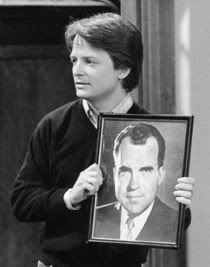 In the past seven or so years, I have come to two conclusions about the very first crush I ever had on anyone. As a young child in the '80s, I watched "Family Ties" faithfully, and developed a real affection for the character of the brash, archcapitalist teenaged son everyone knows as Alex P. Keaton. My mom would wrinkle her nose anytime I told her "I like Alex" as she couldn't stand the character (due more to old-fashioned notions of what adolescent boys were supposed to be like -- she's eventually grown to like the actor Michael J. Fox). But I did. Sometimes he was the only reason I would watch a particular episode. But being a completely nonjealous type, I was happy for him when he found love and to this day find Billy Vera & The Beaters' "At This Moment" to be the only love song I like.
As I've been thinking about various things over the past several years, I've managed to come to two conclusions about this crush: one, that it is this crush that has influenced every other crush I've had on anyone throughout my lifetime, and two, that it could've only been the '80s that Alex P. Keaton, and in turn Michael J. Fox, could've been viewed as being a figure of adolescent adoration.
Looking at the descriptives of the junior Keaton male -- boyish face, clean-cut image, pale skin, thin body frame, looks good in (ubiquitous) suits -- one could accurately point at how this framework fits with every single crush I've ever had on anyone else, both famous and non-famous. Christian Bale? Boyish face, clean-cut image, pale skin, thin body frame (with the exception of Batman Begins), looks good in suits. John Taylor? Boyish face, clean-cut image, pale skin, thin body frame (we'll forget the "A View To A Kill" video for now), looks good in suits. Jonathan Rhys Meyers? Boyish face, clean-cut image, pale skin, thin body frame, looks good in suits. Charlie Sexton (I had a crush on the young Sexton in the mid '90s)? Boyish face, clean-cut image, pale sk-- okay, you get the picture. Even my real life crushes follow this same pattern.
This pattern, BTW, is why I feel that an Alex P. Keaton could've only existed as a teen idol in the androgynous-friendly '80s. See, even though Keaton wasn't androgynous, his boyish, fragile image would not have fit with the stereotyped adorations of the teenage set of an earlier or a later generation. The '70s teen idols were predominantly Mannish with a capital M, featuring crudely square jawbones, facial hair, flannel, and jeans. These boys often looked years older than they actually were because social mores at the time dictated likewise. In the '90s, male teen idols were more youthful but were adorned in more casual gear and were more casual overall. Plus the fact that a character portrayed as being a fan of conservative politics would not have flown in the Clinton '90s. (I wonder if Alex P. Keaton played a role in having my idealized political period be conservative in bent.)
So therein lies the ponderings of the last several years about my first-ever crush, a crush that has influenced me in ways I did not notice for a long time.
Subscribe to:
Posts (Atom)
